Offshore Fish Rafts: The "Small Plot of Land" for Sea-Dwelling Families — The Ultimate Revelation of the "Sea Palace" Case (Part 3)
[2] This article is dedicated to the 25th anniversary of the promulgation of the Administrative Procedure Law and its first major revision!
2. Offshore Fish Rafts: The "Patch of Land" for Seafaring Families
As the saying goes, "Those who live near mountains live off mountains, those who live near the sea live off the sea." Humanity has always prioritized meeting the needs of survival above all else. For generations, people living along the coast have had little land to cultivate crops, so the sea became their primary source of livelihood. However, as offshore fishery resources gradually depleted, seafaring families could no longer sustain themselves through traditional fishing methods alone. This gave rise to mariculture technology, and fish rafts became the most important production tool for these families, second only to their boats.
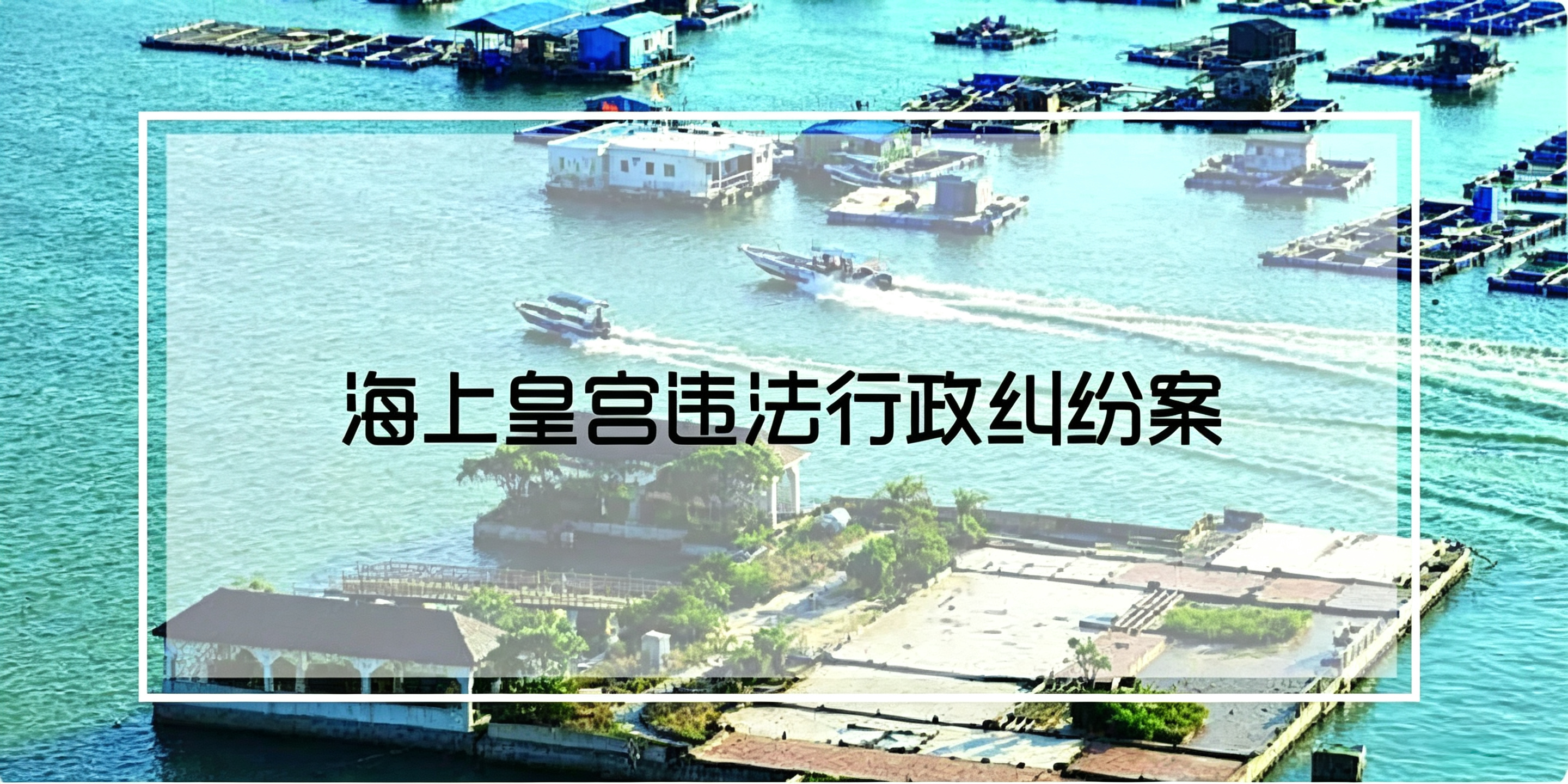
A so-called fish raft is made by nailing sturdy, durable wood into two-meter square grids. Four grids form a "田" (field) shape, and more grids combined together make a "raft." Floating devices (most commonly plastic buoys) are tied to the wooden grids, keeping them afloat on the sea surface. Beneath the grids, fishing nets supported by thin iron rods are securely installed, and inside these nets, fish and other seafood are raised. This is the so-called cage culture technology, which has been widely adopted in China's coastal regions. Therefore, if you travel along China's long coastline, you will see large-scale fish rafts on the sea in many places. Row after row, they stretch out like boundless fields, creating a magnificent sight and forming a unique and beautiful landscape along the coast.

On the fish rafts, there were also crude little wooden houses nailed together, originally used by fishermen to keep watch over their fish and guard against thieves overnight. As fish raft construction techniques advanced and their scale expanded, the houses on the rafts became increasingly sturdy and complex, with some capable of accommodating a fisherman's entire family for long-term living. In this way, fish rafts truly became the fishermen's homes at sea! Later on, as the "farm stay" business model—integrating tourism, dining, fruit-picking, and leisure entertainment on land—gained popularity, the sea fish rafts, beyond their original function of aquaculture, added features such as sea sightseeing, seafood tasting, and offshore fishing, becoming a new model for developing the marine economy. This not only increased the income of maritime households but also provided rare material and spiritual enjoyment for tourists and sightseers, creating considerable material and spiritual wealth for society. Looking back now, people naturally see this progress and development as a matter of course, something entirely logical. However, as a special case in the gestation and development of such a new phenomenon, the creation journey and subsequent fate of the "Maritime Palace" tell us that innovation is often extremely difficult, and sometimes even perilous. But that is a story for later; let us set it aside for now.

(To be continued)